
Why Choose an Industrial Panel PC for Your Business Needs?
In today's fast-paced industrial landscape, choosing the right technology is crucial. An Industrial Panel PC has become a popular choice among various sectors. According to industry reports, the global panel PC market is projected to reach $5.75 billion by 2026, growing at a CAGR of 11.8%. This growth highlights the increasing reliance on advanced computing solutions in manufacturing.
Industrial Panel PCs offer rugged designs suitable for harsh environments. They provide seamless integration with automation systems, which boosts efficiency. For example, these devices usually withstand dust, moisture, and extreme temperatures. However, some businesses encounter challenges selecting the right model. Understanding specific operational needs is essential yet often overlooked.
Investing in an Industrial Panel PC can enhance productivity significantly. Yet, initial costs may deter some businesses. As the report by TechNavio reveals, effective implementation can lead to a remarkable 30% increase in operational efficiency. In a competitive market, overlooking such technology could mean falling behind. A thorough analysis and choice of an Industrial Panel PC is a step toward achieving industry leadership.
Advantages of Industrial Panel PCs in Automation and Control Systems
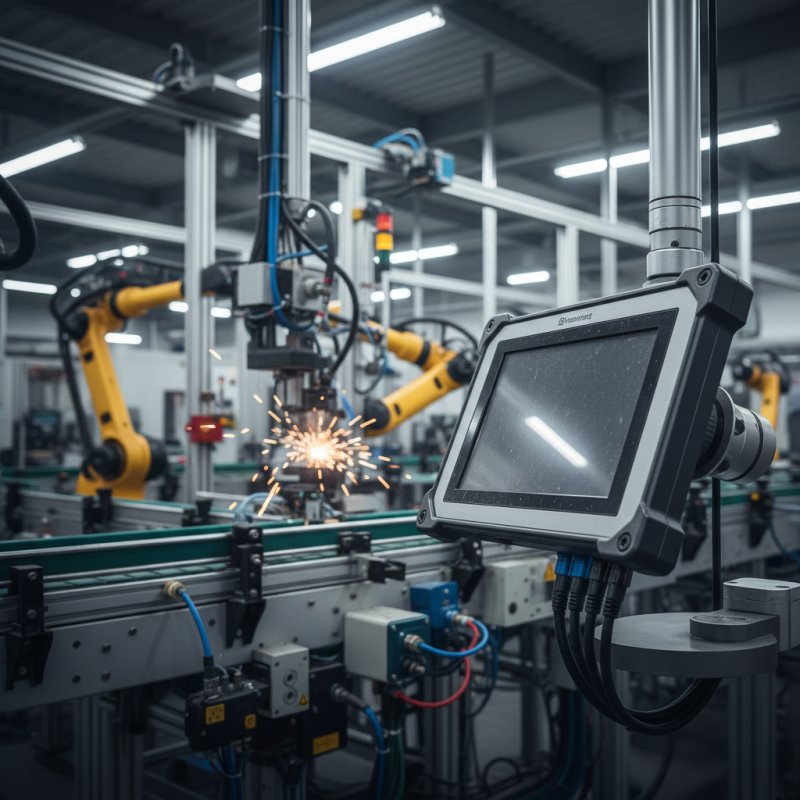
Industrial Panel PCs offer significant advantages in automation and control systems. They are designed to withstand harsh conditions, making them ideal for factories and production lines. With robust casings, they resist dust, moisture, and extreme temperatures. This durability ensures reliability, even in demanding environments. Operators can rely on these systems to function effectively.
The user interface is another strong point. Touchscreen capabilities make interactions smooth and intuitive. Operators can easily monitor processes and make real-time adjustments. This responsiveness can lead to increased efficiency. However, not every industrial setting can benefit from a touchscreen. Some workers may find traditional interface methods more effective. User preferences vary, and that’s a consideration worth exploring.
Integration is also crucial. Industrial Panel PCs can connect with various machines and control systems. This improves overall workflow and data management. Yet, the complexity of integration can pose challenges. Not every business has the necessary expertise to implement these technologies effectively. Some companies may struggle with the transition. It’s vital to assess your specific needs before making a decision.
Key Features of Industrial Panel PCs for Business Applications
Industrial Panel PCs have become essential tools for various business applications. Their rugged design is a significant advantage. These devices withstand harsh environments. Dust, moisture, and extreme temperatures are common challenges in factory settings. With IP-rated enclosures, these PCs can endure these conditions, making them reliable for continuous operation.
Another key feature is their touchscreen interface. This allows for intuitive interaction. Workers can manage tasks easily, improving efficiency. The screens are often made with durable materials to resist scratches and impacts. Some models even support multi-touch gestures, enhancing usability. However, the sensitivity can sometimes lead to unintentional inputs, which may disrupt workflows.
Connectivity options also play a crucial role. Industrial Panel PCs typically offer multiple ports, including USB, Ethernet, and serial connections. This flexibility allows seamless integration with existing systems. However, the variety can be overwhelming. Businesses may need time to configure the systems correctly. Overall, these features make Industrial Panel PCs a powerful choice, despite potential challenges in implementation.
Cost-Effectiveness of Industrial Panel PCs Compared to Traditional PCs
When evaluating business technology, cost-effectiveness is vital. Industrial Panel PCs often present a more budget-friendly option than traditional PCs. They combine hardware and software in a compact design, saving space and reducing additional costs. Maintenance and upgrades can be simpler due to their integrated nature. This is a significant factor for small and medium businesses.
Despite the upfront investment, Industrial Panel PCs typically last longer. They're built for durability and can withstand harsh environments. However, not every business may find them necessary. For example, companies with less demanding tasks may not need the robust specifications. This requires careful consideration of your specific needs.
While these devices can be costly, the return on investment can be better. Businesses can experience lower operational costs over time. Yet, it is essential to assess whether these savings justify the switch. Balancing initial expenses with long-term benefits is crucial. If not properly evaluated, the choice could lead to financial strain.
Why Choose an Industrial Panel PC for Your Business Needs? - Cost-Effectiveness of Industrial Panel PCs Compared to Traditional PCs
| Feature | Industrial Panel PC | Traditional PC |
|---|---|---|
| Durability | High (IP65 rated) | Low |
| Operating Temperature | -20°C to 60°C | 0°C to 40°C |
| Cost | Higher initial cost, lower total cost of ownership | Lower initial cost, higher maintenance costs |
| Energy Efficiency | High | Variable |
| User Interface | Touchscreen friendly | Keyboard and mouse |
| Application Longevity | Long-term service availability | Shorter support lifecycle |
Market Trends: Growth and Adoption of Industrial Panel PCs in Industry
The industrial panel PC market is witnessing significant growth. By 2025, the global market size is expected to reach approximately $6.5 billion, with a compound annual growth rate of nearly 9%. This rapid rise is driven by industries seeking automation and efficiency. Manufacturers are increasingly adopting these systems to streamline operations.
Key sectors such as manufacturing and logistics are leading the charge. Many companies are integrating panel PCs to enhance data collection and streamline processes. However, not all implementations succeed. Some businesses struggle with the integration of new technologies into legacy systems. Challenges often arise in training employees to use these advanced devices effectively.
The versatility of panel PCs is undeniable. They can withstand harsh environments, making them ideal for factory floors. Yet, selecting the right model can be daunting. The variety of features and specifications available can confuse decision-makers. Companies need to prioritize their specific requirements to make the best choices. As the adoption of industrial panel PCs continues to rise, addressing these issues will be crucial for maximizing benefits.
Impact of Industrial Panel PCs on Operational Efficiency and Productivity
Industrial Panel PCs can greatly enhance operational efficiency and productivity. They offer a centralized interface for multiple tasks. Employees can monitor processes in real-time. This quick access to data leads to faster decision-making. Manual tasks are reduced, minimizing errors in critical operations.
These devices are designed for harsh environments. Many are dust-resistant and can withstand extreme temperatures. Such durability ensures consistent performance in factories or warehouses. However, they require regular maintenance, which can be a hidden cost. Neglecting updates might lead to software issues, slowing down work.
With user-friendly interfaces, training staff becomes more straightforward. Employees adapt quickly, leading to a smoother workflow. Yet, reliance on technology brings challenges. Technical glitches can cause delays. Proper backup systems should be in place to mitigate risks. An Industrial Panel PC can boost productivity, but constant monitoring and support are essential.
Impact of Industrial Panel PCs on Operational Efficiency and Productivity
This chart illustrates the improvements in operational efficiency and productivity across various business functions after the implementation of Industrial Panel PCs. The data reflects the percentage increase in efficiency in tasks such as data processing, inventory management, and customer service.
